

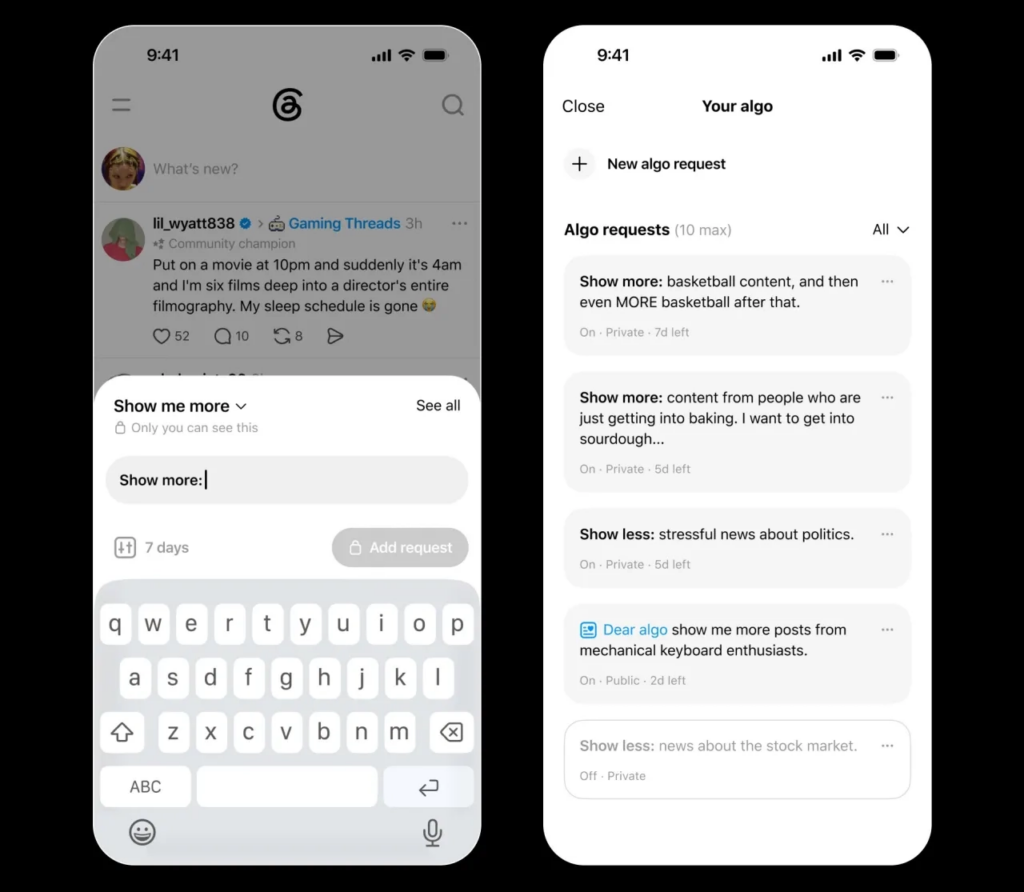
Threads, Instagram, TikTok — one by one, platforms are rolling out tools that let users explicitly tell the algorithm what they want to see. Topic sliders. Interest toggles. Content preference menus. The framing is: users are finally in control.
The problem with that framing is that users have always been in control. They just didn’t need a menu to exercise it.
Every time someone watches a video to the end instead of swiping, every time they rewatch a clip or linger on a post a beat longer than usual, they’re signalling something more specific and more honest than any preference toggle could capture. The algorithm already knows you’re still obsessed with Avatar: The Last Airbender. It knows because you watched that fan edit at 1am three Tuesdays ago, not because you told it you’re “interested in animation.”
That’s the distinction that matters here. Explicit preferences are coarse. Behavioural signals are granular. A topic slider saying you’re into musicals doesn’t tell a platform that you’d stop scrolling for a mashup of ATLA characters singing songs from Hamilton. Viewing behaviour does.
What this is actually about
So why are platforms building these features at all?
The honest answer is that user-controlled algorithms are better politics than they are product. In an era of heightened scrutiny around data privacy, algorithmic transparency, and content moderation, giving users a visible dial to turn is a reasonable response to public pressure. It signals accountability. It gives regulators something to point to.
For new users, there’s a genuine use case too. Someone joining a platform cold, with no watch history and no behavioural signal to read, benefits from being able to say “I care about cooking and I don’t want football.” The algorithm has to start somewhere, and explicit preferences are a faster cold start than waiting for behaviour to accumulate.
But for the vast majority of users who’ve been on these platforms for years? The dial changes very little. Their feed is already a detailed portrait of their viewing habits, built from thousands of micro-signals the platform has been reading since day one.
What this means for advertisers
Here’s where the media implication becomes clear. If the signal that determines content delivery is primarily behavioural rather than declared, then the creative strategy that works is the one that earns behavioural engagement, not the one that matches a declared interest category.
That means the job of a social advertiser hasn’t changed with this announcement. The task is still to produce creative across enough formats and messages that viewing behaviour can tell you which version resonates with which person. A user who watches your product video twice signals something different from a user who skips it after two seconds, and both signals are more useful than knowing they ticked “interested in fashion.”
The implication for media planning is straightforward: diversify creative, test formats against each other, and let the platform’s actual delivery data tell you what’s working. The best version of your ad isn’t the one you’d have chosen upfront. It’s the one users’ behaviour selects for you over time.
Bottom line
User-controlled algorithms are a meaningful feature for people new to a platform and a sensible response to the political moment platforms are navigating. For advertisers, they change almost nothing. The behavioural signal that drives delivery and performance is still the one your creative either earns or doesn’t. Build content worth lingering on, run enough variation that the algorithm has something to learn from, and trust the viewing data over the declared preference. That’s been the playbook, and it still is.