

Hours after an AdWeek story declared that Google would bring ads to Gemini in 2026, Google vehemently denied the report. This came just a week ago OpenAI declared a “code red” halting work on all projects outside of their core model, including advertising. This is a level of drama and uncertainty that’s unusual for the search world as each leading AI platform struggles to bring ads to AI chat experiences – without alienating users.
What is certain is that it’s time to start thinking about LLM chatbot advertising, the implications on your business and your approach when ads launch.
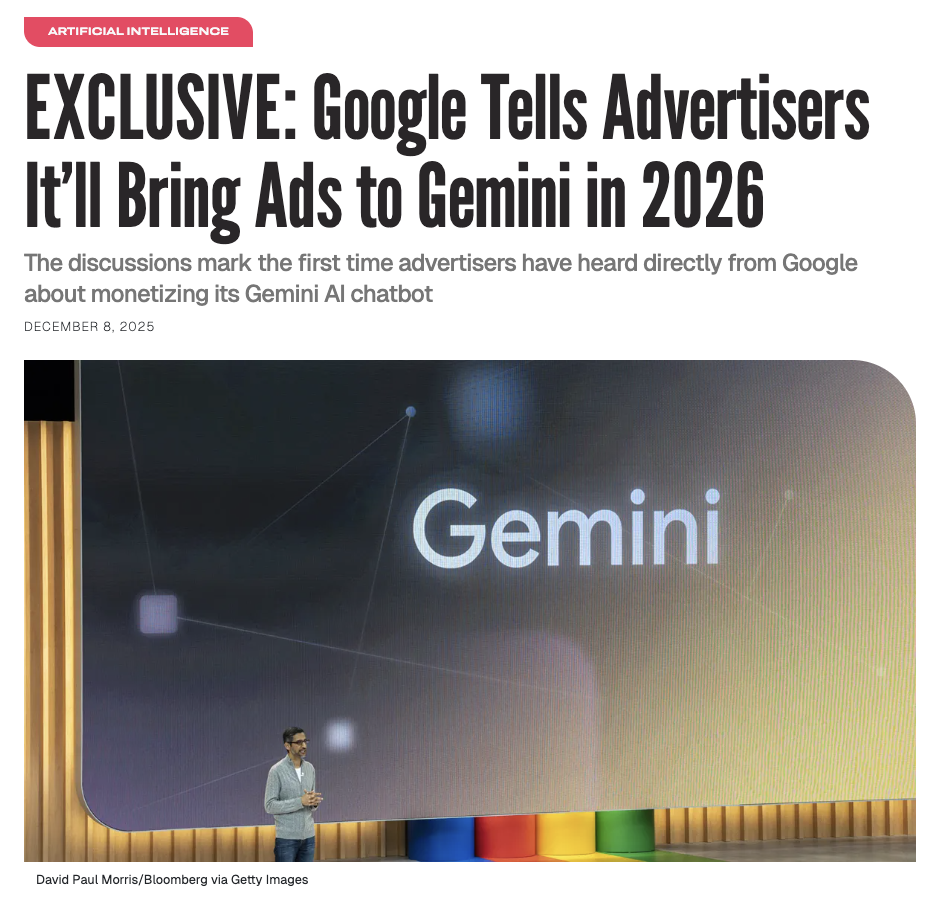
Screenshot from Adweek “EXCLUSIVE: Google Tells Advertisers It’ll Bring Ads to Gemini in 2026”
In our previous posts, we explored how to secure organic real estate in Large Language Models (LLMs) with our Guide to Increasing AI Visibility and how to track that success in AI Visibility Measurement Metrics.
But as we look toward 2026, the other theme that is dominating the conversation is whether (and when) the dominant LLM (large language model) chatbots will turn to advertising. Fundamental differences in consumer user behavior and expectations create challenges unique to LLMs, while the personalization and underlying technology also provide massive opportunities to catapult advertising into a new age.
What We Learned from Perplexity
Perplexity’s foray into advertising—characterized by sponsored suggested follow-up questions and standard CPM models—was short-lived.
They pulled ads quickly after generating extremely limited revenue. The issues were twofold:
- Deteriorated UX: In a chat interface, ads felt interruptive and, worse, created a perception of bias in the answers.
- Measurement Friction: Measuring success in multi-turn chats was incredibly tough. (e.g., Does an impression count if the user ignores the follow-up suggestion?)
Perplexity was far from the dominant player in the space and their ad launch felt rushed. Their struggles are more instructive of what not to do. I wouldn’t let this sway expectations of future LLM advertising too much.
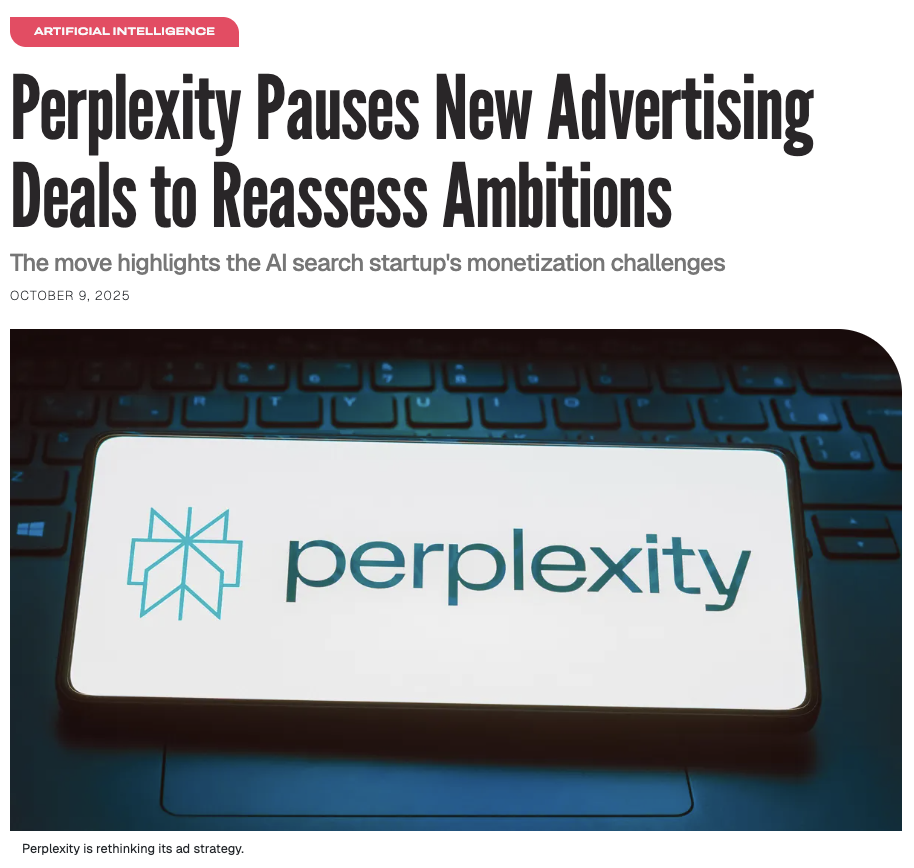
Screenshot from Adweek “Perplexity Pauses New Advertising Deals to Reassess Ambitions”
The OpenAI Question: Will They or Won’t They?
For years, OpenAI positioned itself above the fray of ad-supported models. In 2024, Sam Altman famously stated advertising was a “last resort” and that he “hated ads as an aesthetic choice.”
However, the tone has softened significantly throughout 2025:
- The Pivot: By mid-2025, Altman noted he was “not totally against it.” By October, he stated, “I believe there probably is some cool ad product we can do that is a net win to the user.”
- The Personnel: Actions speak louder than quotes. OpenAI hired former Instacart CEO Fidji Simo as Head of Applications. Simo had massive success scaling ads at Instacart. This, combined with job postings for ad-platform adjacent roles, signaled a clear shift.
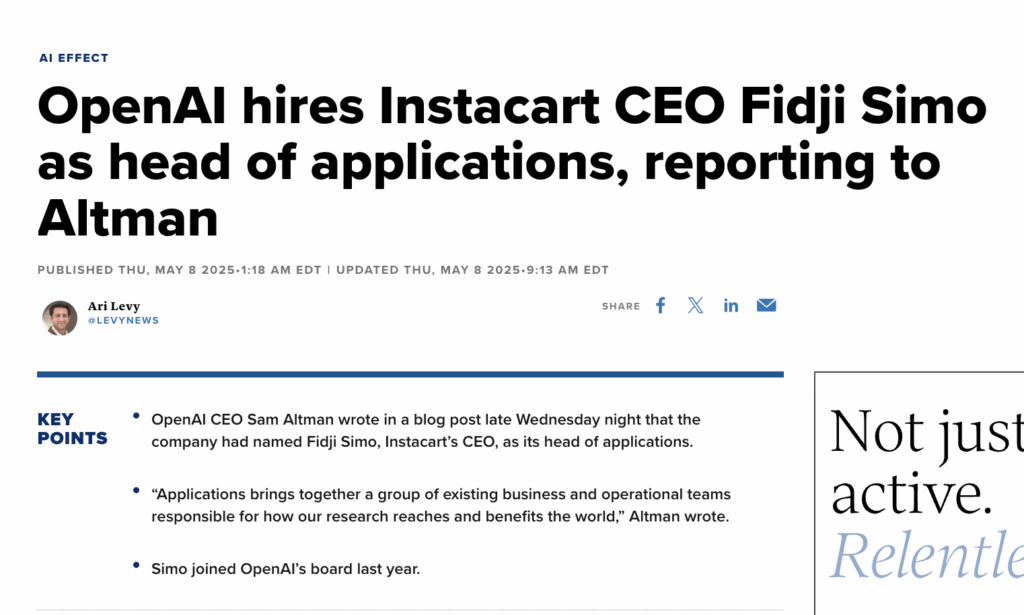
Screenshot from CBNC “OpenAI hires Instacart CEO Fidji Simo as head of applications, reporting to Altman”
Despite a recent “code red” that paused ad work to focus on core modeling, code spotted on the site suggests the framework is being built.
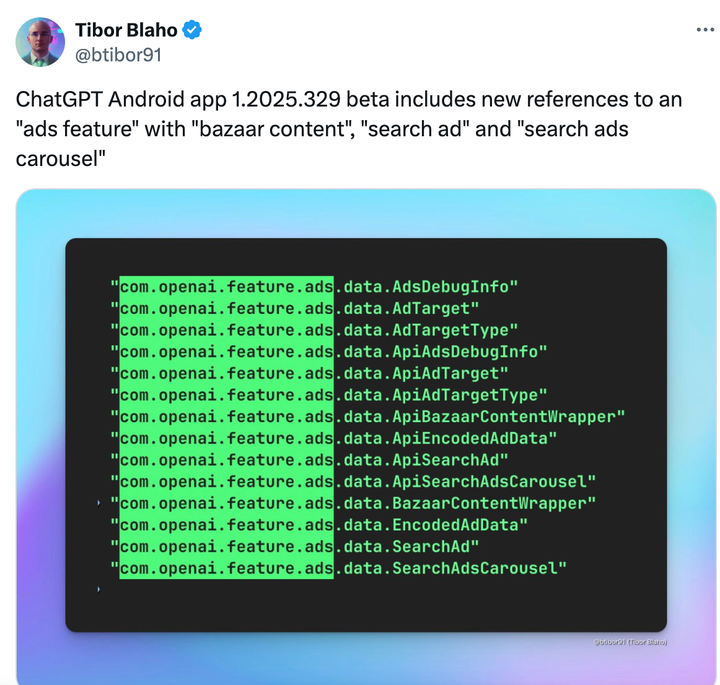
Screenshot from X, via @btibor91
Our Prediction: Expect an OpenAI ad product by the end of 2026. As Eric Seufert points out, if an organization’s goal is maximizing revenue with a product reaching billions of users, “advertising stands alone as its optimal monetization strategy.”
The Google Factor
While OpenAI navigates its identity crisis, Google is playing a strategic game. They don’t need 90% market share with Gemini; they just need to make a path toward profitability impossible for OpenAI.
While Google might slow-roll ads on Gemini to let the user base grow, let’s not forget that Google is, at its core, an advertising company. Sundar Pichai teased in early 2025 that they have “very good ideas for native ad concepts” specific to Gemini. Google would obviously have a massive advantage in infrastructure and support for an ad product.
Our Prediction: Claude and other LLMs will likely own certain market niches regardless (as Claude has started to do on the enterprise side). The market, and advertisers, would likely benefit from a real consumer competitor to Gemini. However, ads will be part of the mix regardless of what combination of OpenAI, Google, and the rest of the field dominate LLM chatbots.
What Will LLM Ads Actually Look Like?
This is where advertisers need to shift their thinking. The consumer engagement model for LLMs is fundamentally different from search.
- Search: You query, you get options, you choose your own adventure. Ads are just efficient distribution mechanisms but we accept that ads are part of that distribution as part of our bargain for a free tool.
- LLMs: You ask with the expectation of a direct and unbiased answer or recommendation. This necessitates trust.
Because of this trust factor, LLMs will be wary of “pay-to-play” answers. However, LLMs have a distinct advantage: Unprecedented Personalization.
At 6’7” I have struggled to find clothes that fit properly (tall people problems).
– My Search History might know I’m interested in “tall men’s clothing.”
– My Social Signals will indicate which brands I click on.
– My LLM Prompting contains my specific dimensions, brands that didn’t fit in the past, and specific style preferences.
We expect LLM advertising to utilize this deep context for a full-funnel approach:
- Commercial Intent: If the user prompts, “Based on my dimensions, recommend a festive holiday sweater between $75-$150,” I might see sponsored suggestions or contextual recommendation blocks.
- Non-Commercial Intent: If I ask about “Harry Truman’s morning routine,” I might see visual ads for clothing brands they are algorithmically likely to buy, appearing as a “break” or sidebar visual, similar to Instagram’s discovery logic.
Potential Future Innovations: these are completely speculative, and maybe a bit aspirational, but LLMs do have an opportunity to make ads significantly better and more personalized.
- Responsive Voice Ads: As voice search takes off on LLMs, expect audio ads to follow.
- Virtual Try-On: Opt-in features where AI generates an image of a product on you based on your photos.
- Gated B2B Content: A prompt for “best CRM for real estate” could trigger a sponsored eBook download specific to that industry.
How to Prepare Now
We are still in the early innings, but smart advertisers can start laying the groundwork.
- Target Themes, Not Keywords: Move away from exact match thinking. Focus on themes and topics, especially for middle/upper funnel visibility. Which categories of prompts represent users you want to get in front of, even if it’s not real-time at the time of the prompt.
- Lean into Automation: Use existing tools like Advantage+ and RSAs to build “muscle memory” on how to curate asset libraries rather than matching static ads to static audiences. Ad creative will undoubtedly be more dynamic on LLMs.
- Test AI Max Campaigns: Look to test these in Q1/Q2 2026 (if available). Even if performance is mixed, they are the clearest indication of what keyword-less AI campaigns look like. Don’t throw good money at bad performance, but if you can test with 5% of your search budget, that’s likely worth it for the R&D takeaways.
- Rethink Measurement: As outlined in our metrics guide, CTRs will likely be lower than traditional search. You must prepare to measure the lift from impressions, similar to CTV or podcast advertising.
- Manage Expectations: Launching an ad platform is hard even with enormous scale and resources (just ask Amazon circa 2012). If OpenAI launches a platform, expect targeting to be basic, reporting to be rudimentary, and support to be scarce.
The Big Question: Finally, consider your internal structure. Is LLM advertising a search function? A social function? Or does it require a dedicated team? Now is the time to decide who will own the budget and the strategy when the floodgates finally open.