Creative testing is pretty good at telling us which ads perform best. But there’s a bigger question that often gets overlooked: what should we actually do with that information?
Say you’ve tested a handful of assets and found a clear winner. You know where to put your budget, but when it comes to briefing the next round of creative, there’s still a lot you don’t know. Was it the hook that made the difference? The message? The creator? And would any of those elements perform just as well with a different audience?
These are the kinds of questions that should be shaping what brands produce next. Yet there’s often a disconnect between what we learn from creative performance and how those findings influence the next brief.
With AI making it easier to produce and test creative at scale, that disconnect becomes even more important to address. Brands have access to more creative variations and performance data than ever, but the real opportunity is in using that intelligence to make better decisions about what to produce next.
Creative testing should be a continuous feedback loop, where each round of testing informs the next creative
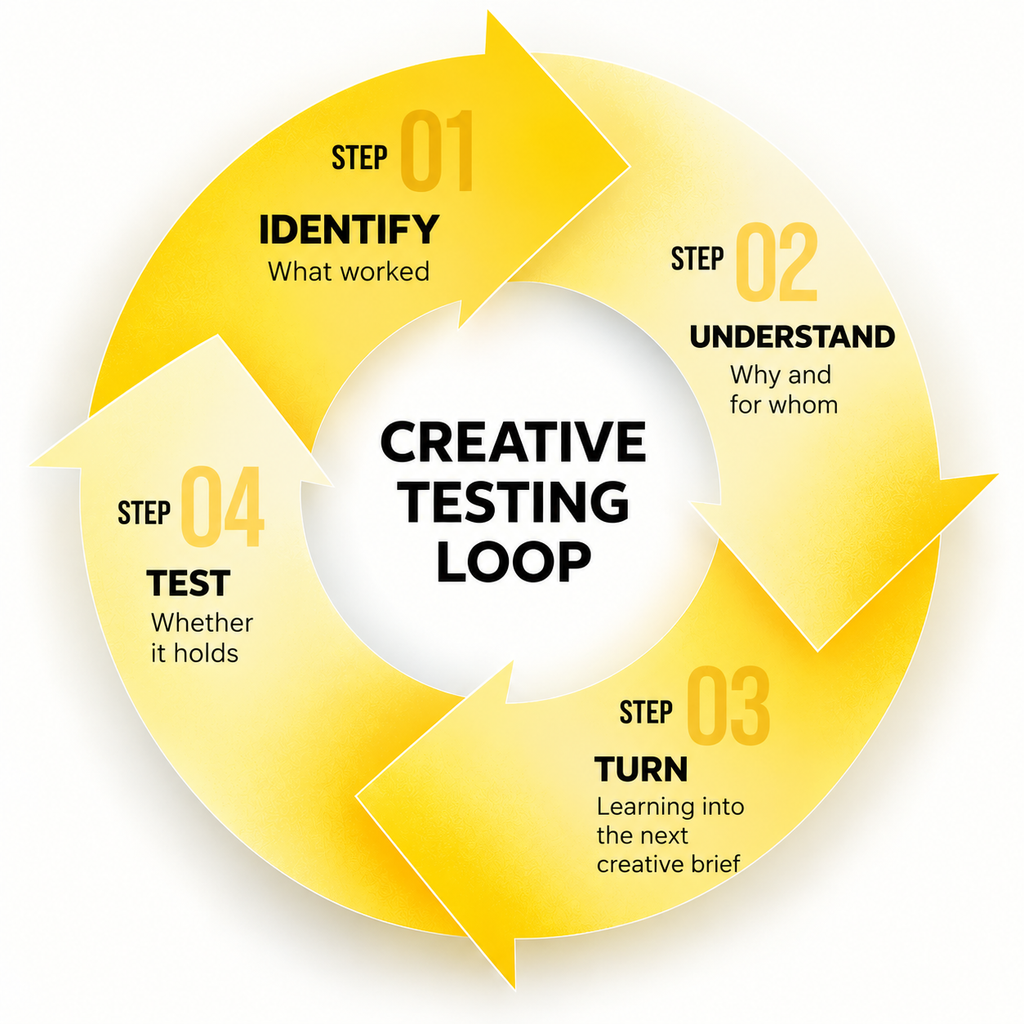
Stop treating the winning ad as the insight
An ad is made up of several creative decisions. There’s the opening hook, the message, the visual treatment, the creator, the format and the call to action. Any combination of these elements can influence how an asset performs, which makes it difficult to know exactly what contributed to a winning result when you’re only comparing ads at the asset level.
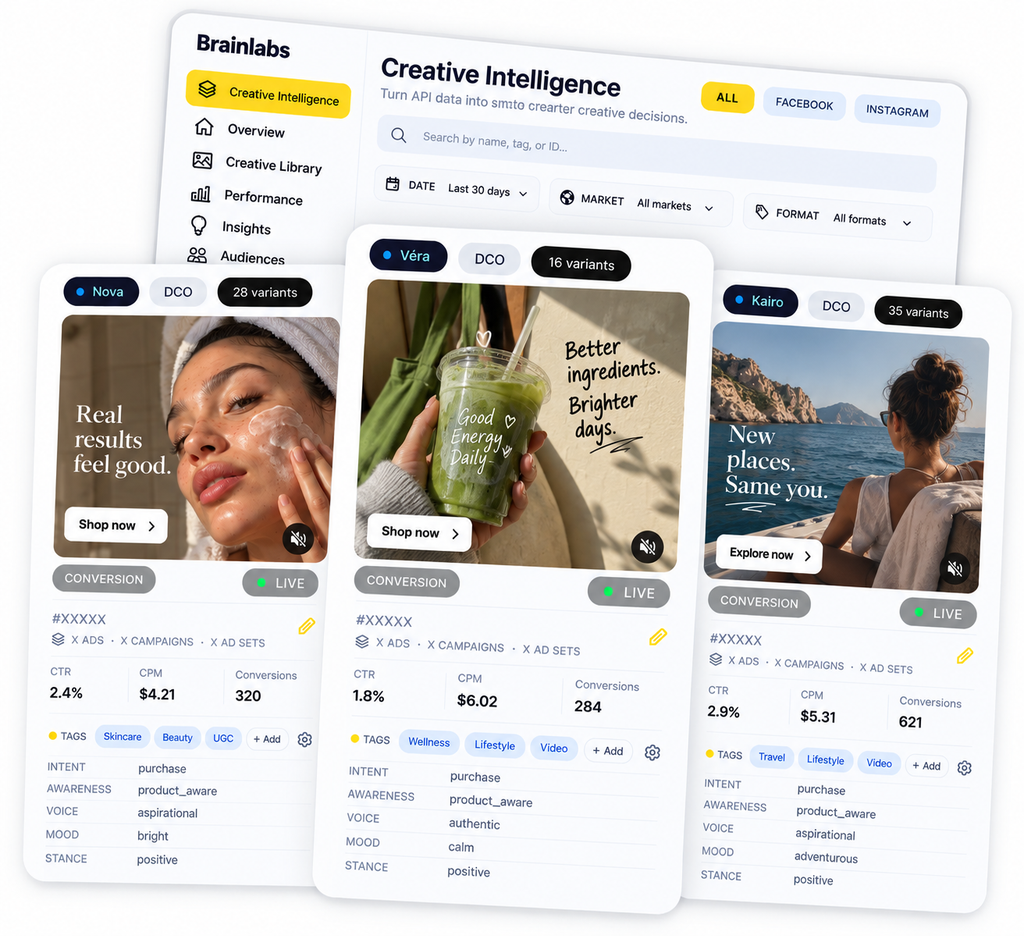
That’s one of the problems we built Creative Intelligence to help solve. By breaking down performance at the individual element level, we can start identifying which creative choices are contributing to results and which are worth testing further.
For example, imagine a product close-up in the opening seconds consistently outperforms a lifestyle-led introduction when it comes to capturing attention. That’s a much more useful finding than simply knowing which of the two ads won. The creative team can now retain that opening structure while testing different messages, creators or formats around it.
There’s an important distinction here because producing more assets that look like the winner doesn’t necessarily tell you whether you’ve understood why it worked. If every new execution changes the hook, message, format and visual treatment at once, it becomes difficult to establish which elements are actually driving the result.
By isolating the variables that matter, teams can build on what they’ve already learned while continuing to experiment with new creative approaches. The objective is to understand which decisions are worth repeating, adapting or challenging in the next round of production.
A winning element still needs context
Of course, identifying a successful creative element is only part of the picture. The same hook, message or visual approach can perform very differently depending on who’s seeing it, where they’re seeing it and what they’re being asked to do.
This is why audience understanding needs to inform both the creative brief and the subsequent analysis. Before production begins, teams should be clear about who they’re trying to reach, what that audience already understands and which barrier the creative needs to overcome. Once the work is live, testing can help establish whether it’s resonating with the intended audience and whether those initial assumptions were correct.
Sometimes the most interesting findings are the ones you weren’t expecting. Creative developed for one segment might consistently over-index with another, revealing an audience opportunity the team hadn’t initially considered. Equally, a proven creative approach might struggle with a new audience because the message doesn’t address what matters to them, even if the execution itself is strong.
The useful learning becomes much more specific: which elements work, for whom, in what context and against which objective. And that context matters when deciding whether a successful approach should be extended to other audiences or whether the next brief needs to take a different direction.
Turn creative intelligence into better production decisions
Here’s where I think brands have a real opportunity to get more value from creative testing. Even when teams have useful performance insights, those findings don’t always make it into the next round of production.
It’s fairly common for creative performance to be reviewed at the end of a campaign, when the next brief is already taking shape or the production plan has been agreed. By the time the team has a clear picture of what worked, there may be limited opportunity to apply it.
The challenge is getting that intelligence into the creative process early enough to influence what gets made. That means bringing creative and media teams together around a shared understanding of what they’re trying to learn, and making sure the findings from one round of testing are available when planning the next.
It also changes the kinds of decisions teams can make.
Making this work consistently also requires a way to capture and reuse what teams learn. Creative elements need to be tagged so hooks, messages, formats, creators and audiences can be compared across executions. Those findings then need to be accessible beyond the individual campaign, allowing teams to identify patterns across channels, markets and time periods.
The next brief should be able to draw on that accumulated knowledge. What have we already established? Which assumptions still need validating? Where are the gaps in the current portfolio? And what should the next round of creative help us understand?
That’s how creative testing starts influencing the work before it gets made, rather than simply explaining its performance afterward.
AI makes the feedback loop faster
AI makes this approach particularly interesting because brands can now produce and test creative variations at a speed that would have been difficult to achieve previously. A single concept can be adapted across multiple formats, audiences and products, giving teams more opportunities to test specific elements and build on what they’ve learned.
But more creative doesn’t automatically mean better learning. A brand could put 100 assets into market and finish the campaign knowing which five generated the highest ROAS, without being much closer to understanding how to reproduce those results. The opportunity is to use that additional production capacity more deliberately: retain a successful hook while testing different messages, explore whether a proven concept works for another audience or adapt an effective execution across placements without losing the elements that made it successful.
AI can accelerate the production and analysis involved, but creative teams still need to decide which questions are worth asking, interpret the audience and cultural context, and determine how the findings should influence the next brief. The faster production becomes, the more valuable it is to have a clear understanding of what you’re trying to learn.
Build the creative portfolio you actually need
As brands produce more creative, the challenge is increasingly about knowing where to direct that effort. A strong testing program should help teams understand which hooks consistently earn attention, which messages resonate with different audiences, which creators build credibility and which elements can be adapted across channels without losing their effectiveness.
More importantly, those findings should influence what gets produced. If testing reveals that the portfolio needs stronger audience-specific messaging, a different creative format or an entirely new concept, the next brief should reflect that. And if a particular element is consistently driving results, teams should have a clear understanding of how to extend its value without simply reproducing the same execution.
Creative teams still need to interpret culture, develop ideas and decide how the brand should show up. Creative intelligence gives them better evidence to work with, helping them make more informed decisions about where to invest their time and creative resources.
Ultimately, that’s what we should be asking more of creative testing. We already know how to identify winning ads. The bigger opportunity is using what we’ve learned from them to decide what the portfolio needs next.