


The era of creative scarcity is nearly over. As generative AI makes producing high-quality creative assets exponentially cheaper and faster, we are entering a new paradigm of “infinite creative”. This solves the traditional production bottleneck but creates a new, more complex challenge: in a world where we can make anything, how do we decide what to make?
This article explores how to navigate this new reality by visualising it as a vast “creative fitness landscape,” where the peaks represent high-performing creative. Since real-world data for testing is limited, we must use intelligent strategies to find these peaks. We propose a two-part toolkit:
The “Exploit” Strategy: Using AI to make micro-variations on successful creative to find local optima.
The “Explore” Strategy: Making data-informed “big jumps” to discover new, breakthrough creative territories.
Looking ahead, we suggest the ultimate key to unlocking this landscape is removing the data constraint itself, possibly through synthetic audiences. This future, however, remains uncertain, as the accuracy of such tools is yet to be determined.
The end of the production as the creative bottleneck

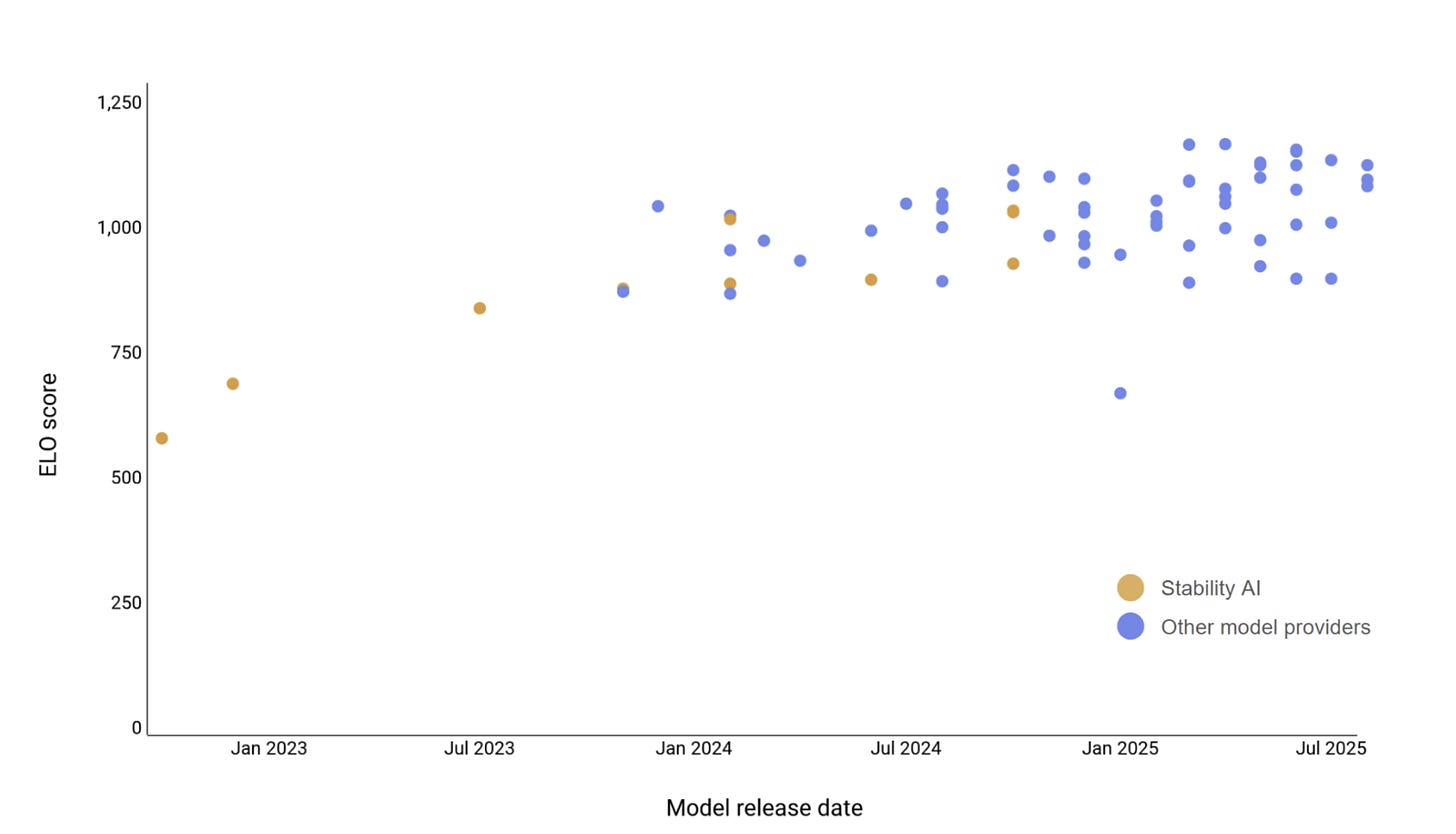
Commoditisation is evident in couple of ways from the data in Graph 1 – the diminished advantage of those with an early start, e.g. Stability AI in orange, but also the clustering of model scores – everyone’s models are pretty similarly ranked. It’s worth noting that prices for image and video generation are stable right now but the trajectory for similar LLM technologies has rapidly decreased and its expected image and video generation will do the same.
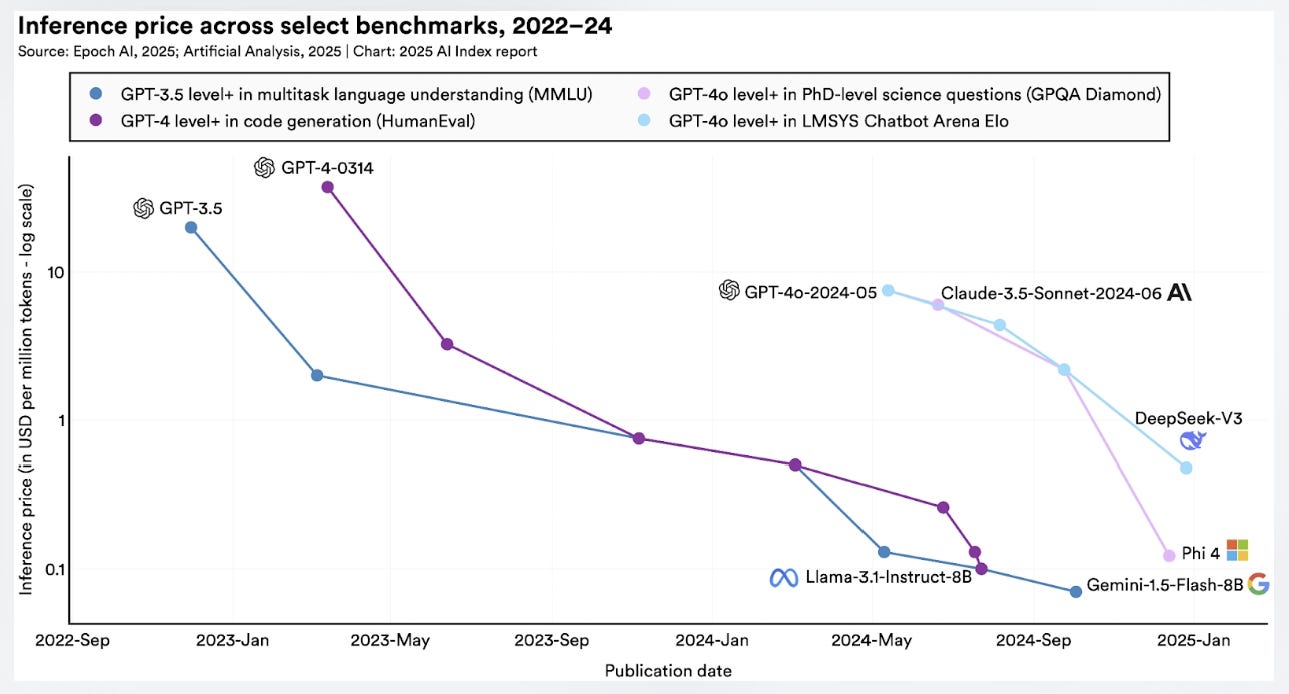
Creative production is a bottleneck that impacts not only the speed of campaign activation but also its overall effectiveness. We know that creative drives 70% of campaign performance1 and that creative diversity is a key performance driver2. A slow, resource-limited creative process, therefore, has a significant and direct impact on marketing’s effectiveness.
The future, however, promises to be quite different. The quality of generative image and video AI tools has rapidly increased and at the same time the market appears primed for commoditisation.
So what is the result of higher-quality and ever-cheaper creative production? Over the next few years, the ability to make any creative we want, with any content we want, will become a reality. In simple terms, we’ll have an infinite pool of creative to choose from.
Infinite creative. Let that sink in
The fitness landscape of infinite creative
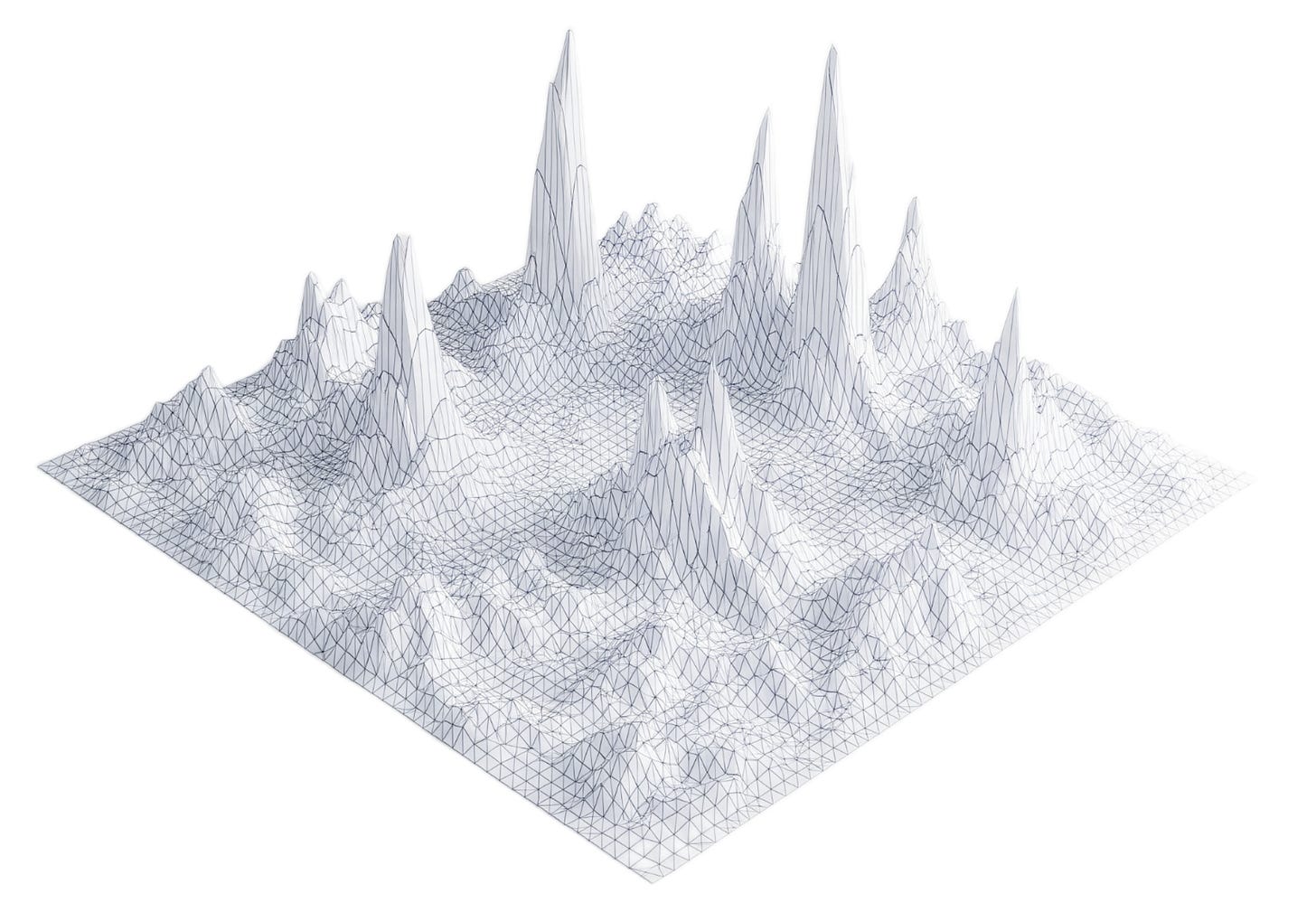
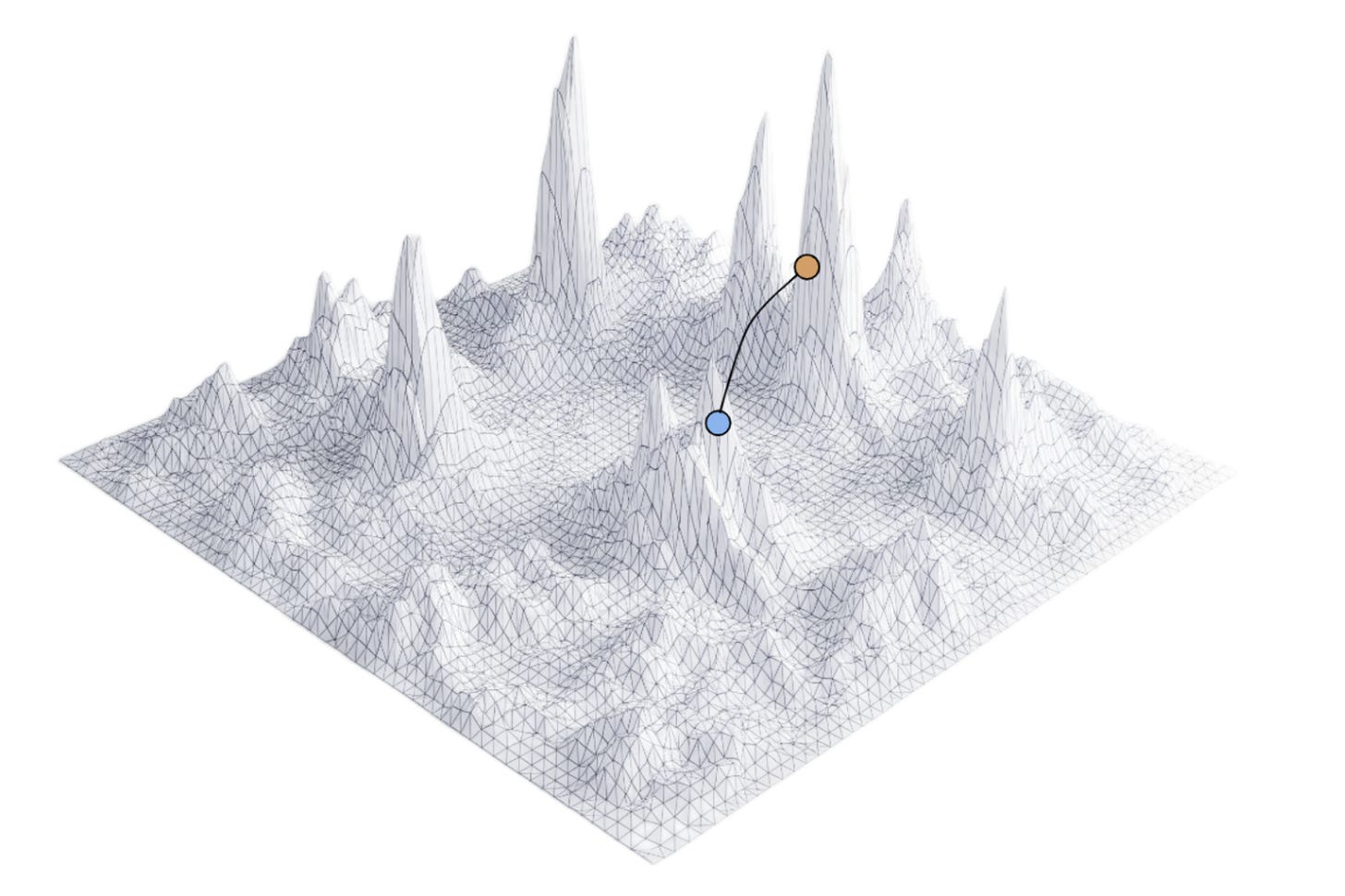
Let’s imagine that every creative possibility can be represented on a 2D grid like that below in figure A. Every point on the grid is a different creative, with minor creative differences between points which are adjacent to each other.

We know that some of these creative possibilities will perform better than others. Therefore we can add a 3rd dimension to the grid; the vertical axis here is fitness, which we’ll loosely define here a creative performance. The “peaks” are highly effective ads, and the “valleys” are the ones that don’t perform.
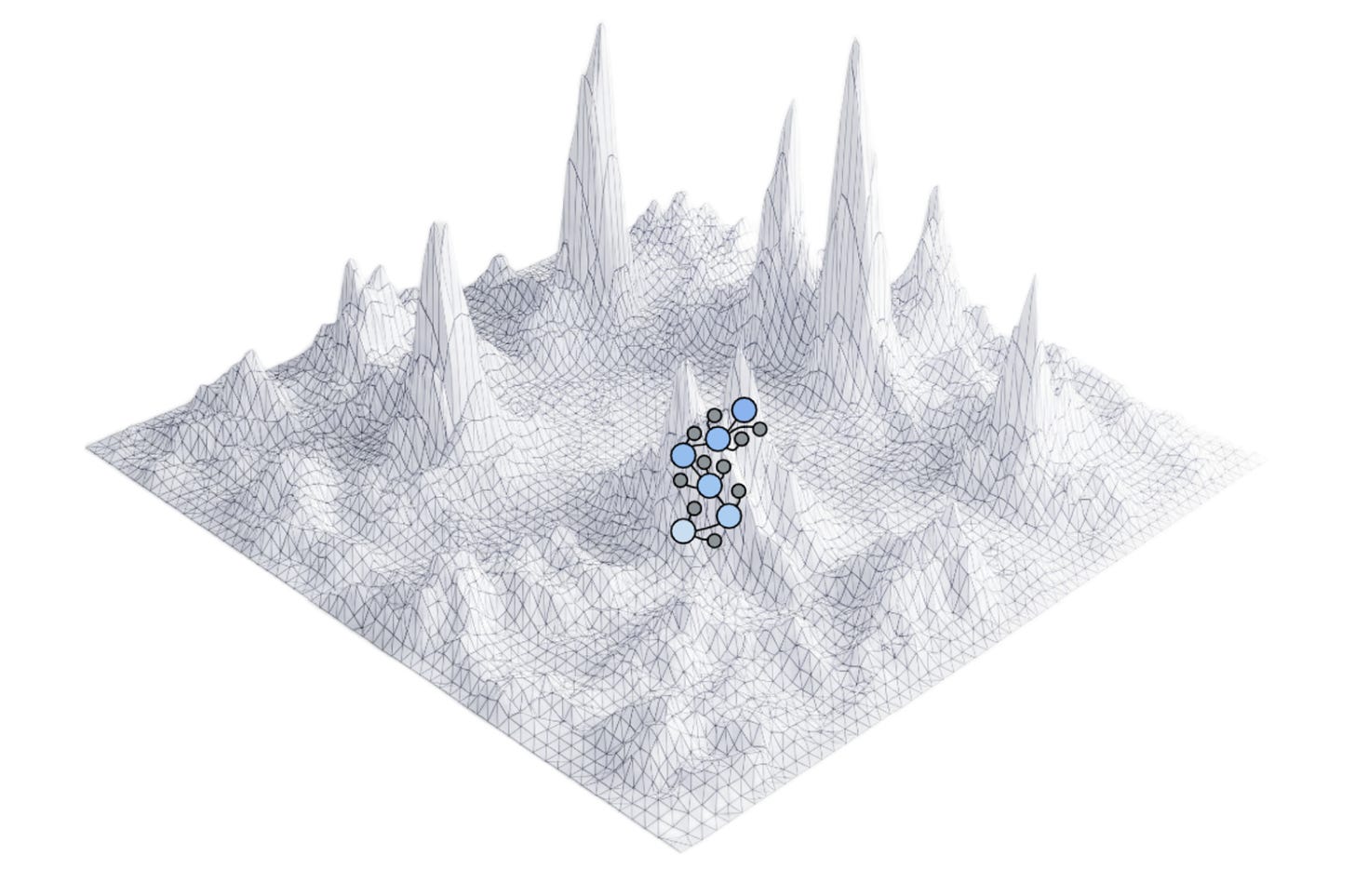
We determine the fitness of each creative through live testing, but testing every option in an infinite landscape is impossible. Imagine running just one million creative variants in an account. The daily clicks or conversions for each would be so low as to be statistically meaningless. Herein lies the new conflict: while creative is effectively unlimited, the data needed to test it is not
All this is to say that we start with figure A but we don’t know the shape of figure B upfront.
Our fundamental issue now becomes clear – we can make any image in this landscape now due to generative AI which is a huge release on the traditional creative bottleneck, but given our newly found data limiting factor, how can we work out which creative variant we should test next to maximise our chances of finding an improvement vs the control?
Put another way: how can we intelligently navigate the creative fitness landscape to maximise creative performance?
The Navigator’s Toolkit: Exploit and Explore
To answer our navigation challenge, we have two complementary strategies:
- Exploit our current position to find the best possible local peak
- Explore more widely to escape local peaks and seek even higher ones
Generative AI makes both strategies faster, easier, and more effective than ever before.
The “Exploit” Strategy
Early exploration at Brainlabs:
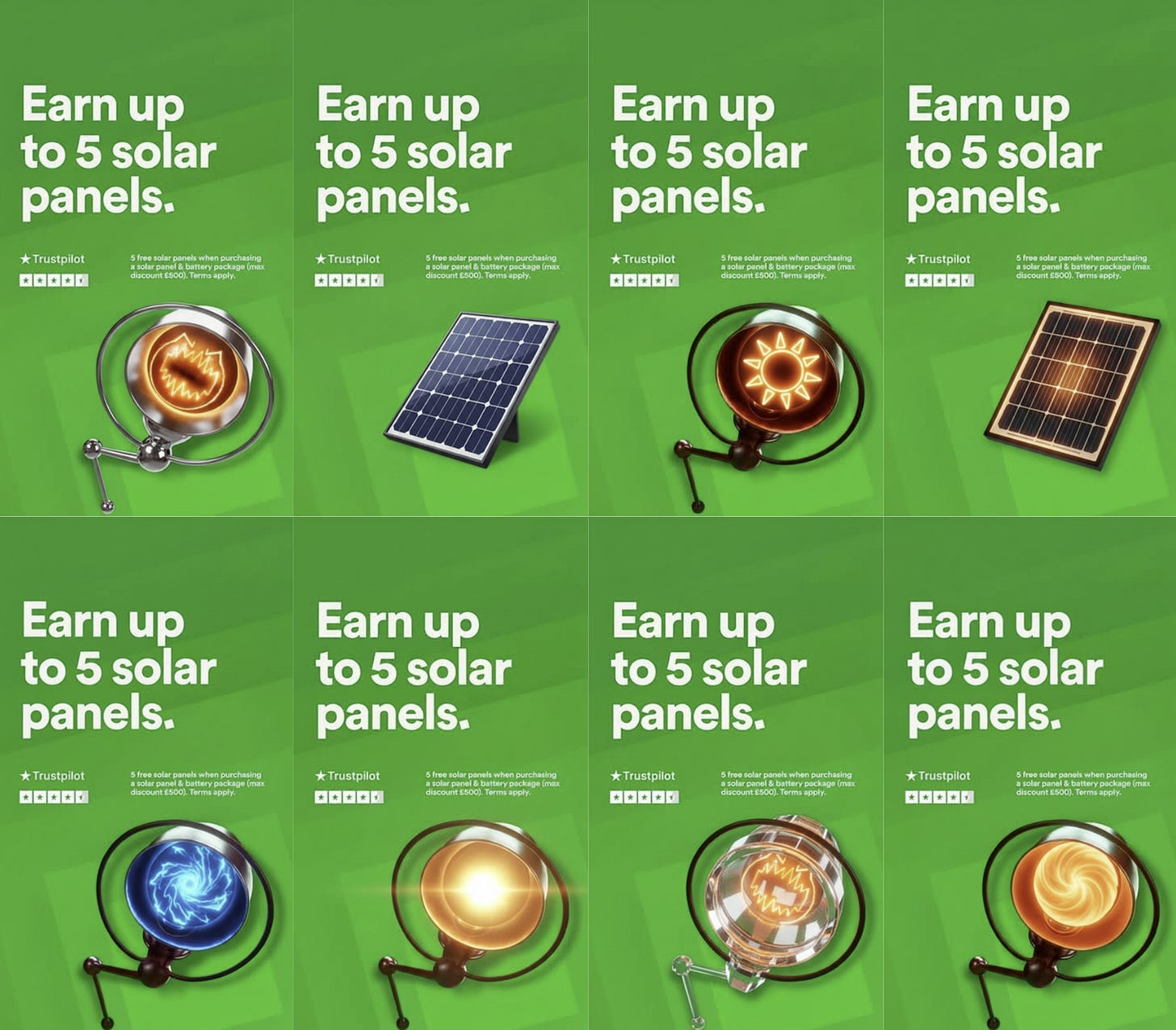
We’ve been playing with small scale variation generation across text and creative, allowing us to increase creative diversity in the platforms, but also gradually move towards local optimums. An example of the creative outputs below:

The technique can also be applied directly to adverts, keeping all other elements the same.
Goal: To meticulously map a known high-performing area of the landscape to find its absolute highest peak.
Method: Use generative AI to create a number of microvariations of an existing high performance creative, these exist in a similar area of the fitness landscape. Continue to select the highest performing creative and make more variants using that as the seed.
Why it works: This method has two benefits. First, providing more creative variation gives bidding algorithms more options, allowing them to better match the right creative to the right user and context. Second, by continuously using the top performer as the ‘seed’ for the next generation of variants, you create a rapid, data-driven cycle of gradual improvement
The “Explore” strategy
Relying solely on the exploit strategy can get you stuck on a ‘local peak.’ If you only ever optimise your current position, you’ll never risk a short-term dip to cross a valley and find a much higher mountain. Therefore, we need a strategy for exploration: a way to jump to a new area of the landscape with a high probability of success.
Goal: To escape “local peaks” and discover a completely new, potentially much higher-performing creative territory.
Method: Take historical creatives with high performance, label them to understand content and generate new creatives based on this labelling, or directly cross-breed creatives without reducing them to their labelled components.
Why it works: This strategy uses historical performance data to inform its leaps. By analysing the attributes of past winners, we can identify other areas of the creative landscape that are likely to be fertile ground. This makes exploration less of a shot in the dark and more of a calculated, strategic jump. For instance: Imagine an insurance company’s AI analysing top-performing trailers in the film industry, identifying ‘fast-paced editing’ and ‘rising emotional scores’ as key attributes, and then applying those principles to generate a new, surprisingly dynamic ad concept.
So we’ve discussed how both the “Exploit” and “Explore” strategies are powerful ways to explore the creative landscape and discover new performant creative, all enabled by AI. However, while powerful, these strategies are ultimately governed and limited by the speed and cost of acquiring real-world performance data.
What if we could release the main constraint we’ve imposed? What if data was no longer the limiting factor?
Jumping further into the future – removing the data limitation on creative testing
To truly explore the infinite landscape, we must remove the data limitation detailed above – a feat that may be made possible by synthetic audience
A synthetic audience is a sophisticated simulation of a person, or possibly target market, built from a combination of LLM outputs and real-world data. They aim to accurately represent an audience through calibration enabling them to be used much like a focus group
Using these audiences to produce synthetic dataset of performance may allow pre-testing at tremendous scale across the creative landscape. Assuming that compute costs are non-zero, we’d still be unable to explore the whole landscape but we could move at much greater speed when using the exploitation technique and de-risk our exploratory jumps. It’s even possible if we allow a creative to lose for long periods that we might not need to jump at all and can simply move gradually through the peaks and valleys similarly to the exploit strategy.
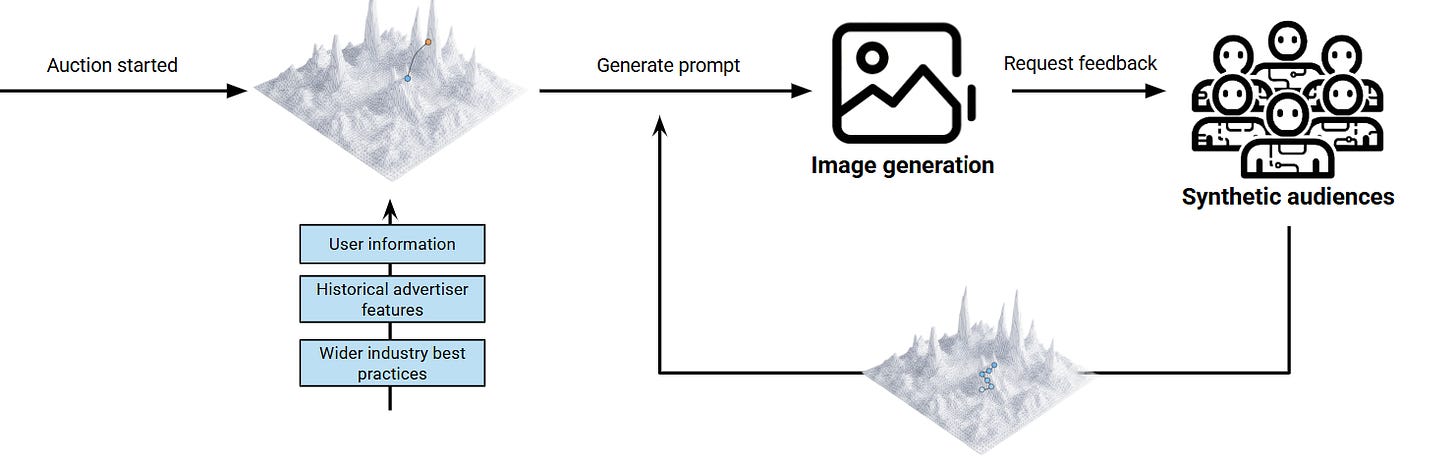
If model speeds increase and costs decline on this technology – as they should given they are LLM output based, as discussed, likely a commodity – we could even imagine a world where these exploratory searches for the most effective creative could be run at the point of auction, using real-time signals to narrow the landscape to explore and then exploration and exploitation strategies to hone in on the best creative for that person given everything we know about them – think of it as DCO but without the guesswork.
Caveat – and it’s a big one. This future depends entirely on the assumption that synthetic audiences could in the future accurately predict the real world outcomes of creatives being put in front of actual humans. The jury is very much still out on that one.
Conclusion:
We stand at the inflection point of a new creative era. The bottleneck of production that has defined marketing for decades is dissolving, replaced by an infinite landscape of creative possibilities powered by generative AI. While this presents an incredible opportunity, it shifts the core challenge from production to selection.
As we’ve explored, navigating this landscape requires a dual approach: exploiting known successes with surgical precision through micro-variations, while simultaneously exploring new territories with data-driven creative leaps. The future promises an even greater acceleration of this process, where synthetic audiences could remove the data constraint entirely, allowing for creative testing at a scale previously unimaginable.
Sources:
Graph 1 – data supporting conditions for commoditisation of AI image generation. Data from Artificial Analysis, https://artificialanalysis.ai/text-to-image/arena?tab=leaderboard. Accessed 14 August 2025.
Graph 2: Falling cost of 1 million inference tokens over time. Chart 2025 AI Index Report Stanford https://hai.stanford.edu/news/ai-index-2025-state-of-ai-in-10-charts
1) Google Media Lab. 2024.
2) Vervaunt. “The Importance of Creative Diversity: A Meta Report.” 2025.